


|
 |
|
 |
|
Introduction of the Sub-Committee of Environment, the Association of North East Asia Regional Governments |
 |
|||||||||||||||||||
|
|||||||||||||||||||
| Environmental Status | |||||||||||||||||||
| Marine environment | |||||||||||||||||||
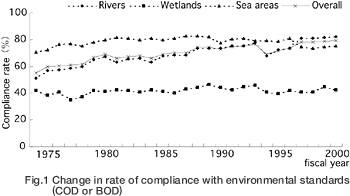 Water quality Water qualityChemical Oxygen Demand (COD) is a representative water quality index for organic pollution. The COD compliance rate with the environmental standards remained constant around 80 % between 1980 and 1996. This was reduced to around 75% post 1997 and is probably due to the deterioration of the water quality around river mouths. |
|||||||||||||||||||
|
|||||||||||||||||||
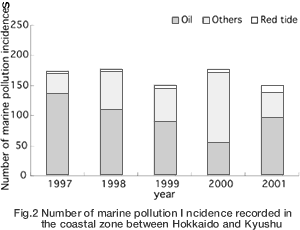 Marine pollution Marine pollutionAccording to the recent surveys of Japan Coast Guard 150-180 incidences of marine pollution occur annually and have been reported along the coast between Hokkaido and Kyushu. Oil pollution incidents are the most frequent form of marine pollution, however several red tides are also recorded every year. In 2000, high numbers of waste pollution were reported with 113 recorded incidences. |
|||||||||||||||||||
|
|||||||||||||||||||
| Status of coastline Many parts of the coastline (intertidal areas) within the Sea of Japan region remain untouched and the proportion of natural coastline is 10-20% higher than compared to the national average. |
|||||||||||||||||||
|
|||||||||||||||||||
| River environment | |||||||||||||||||||
| Water quality Biological Oxygen Demand (BOD) is a popular water quality index for organic pollution and its compliance rate with environmental standards has been constantly improving. Although the compliance rate momentarily decreased in 1994 due to persistent droughts, it has since recovered and in 1997 reached an 80% level (Fig. 1). |
|||||||||||||||||||
|
|||||||||||||||||||
| Status of sewage treatment As of 1998, the percentage of sewered population in Japan stood at 58% but it was under 50% in many parts of the country. Especially, the Tohoku and Chugoku regions, both in the Northwest Pacific Region lag behind. |
|||||||||||||||||||
|
|||||||||||||||||||
| Atmospheric environment | |||||||||||||||||||
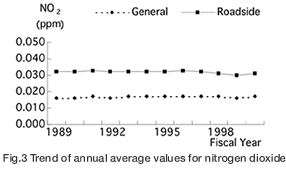 Nitrogen oxides (NOx) Nitrogen oxides (NOx)The average NO2 concentration value in 2000 was 0.017ppm at the “ambient air pollution monitoring station (General) *1” and 0.031ppm at the “automobile exhaust gas monitoring station (Roadside) *2”, showing a slight increase from the previous year but no significant deviation from the long term trend (Fig. 3). NO2 concentration in most of the region reached a 100% compliance rate with environmental standards although some “automobile exhaust gas monitoring station(s)” had only an 80% compliance rate. |
|||||||||||||||||||
|
|||||||||||||||||||
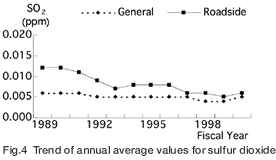
| Sulfur dioxides (SO2) SO2 concentration is stable with a slight indication of a decreasing trend (Fig. 4). |
|||||||||||||||||||
|
|||||||||||||||||||
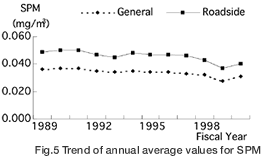
| Suspended particulate matter (SPM) SPM concentration is stable and recently displays a decreasing trend (Fig. 5). Although SPM concentrations in some areas of the region have low compliance rates compared to environmental standards most regions show a 90-100% compliance rate. |
|||||||||||||||||||
|
|||||||||||||||||||
 |
 |
||||||||||||||||||
| *1 : 24hr air pollution monitoring station, established in accordance with the “Air Pollution Control Law” *2 : 24hr vehicle exhaust gas air pollution monitoring station, established in accordance with the “Air Pollution Control Law” |
|||||||||||||||||||
|
|||||||||||||||||||
| Environmental Administration | |||||||||||||||||||
 Administrative
structure Administrative
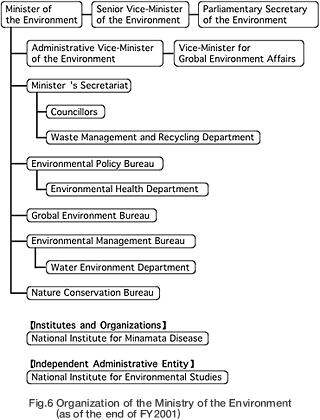
structureThe Ministry of the Environment plays a central role in the development and implementation of environmental policy of Japan. Its main tasks are protection of the global environment, prevention of pollution, protection and maintenance of the natural environment as well as various other environmental protection measures (including the creation of a favorable environment). The Ministry of Economy, Trade and Industry, and The Ministry of Land, Infrastructure and Transport are also involved in various environmental programs working on issues such as global warming and vehicle pollution. Environmental laws and regulations “The Basic Environment Law” (enacted in 1993) and “The Natural Environment Conservation Law” (enacted in 1972) are the two fundamental environmental laws. “The Basic Environment Law” provides the basic national policy on environmental conservation and the “Natural Environment Conservation Law” provides the basic conservation policy for the natural environment of Japan. Under the above laws, various air, water and soil quality laws are enacted (Table 1). |
|||||||||||||||||||
|
|||||||||||||||||||
|
|||||||||||||||||||
|
|||||||||||||||||||
 |
|||||||||||||||||||
|
 Informational Interchange on Environmental Protection among Local Governments in North East Asia Region Informational Interchange on Environmental Protection among Local Governments in North East Asia Region |
|
Links |


